RIDC Mill 19 – Lighting Design for Sustainable Adaptive Reuse
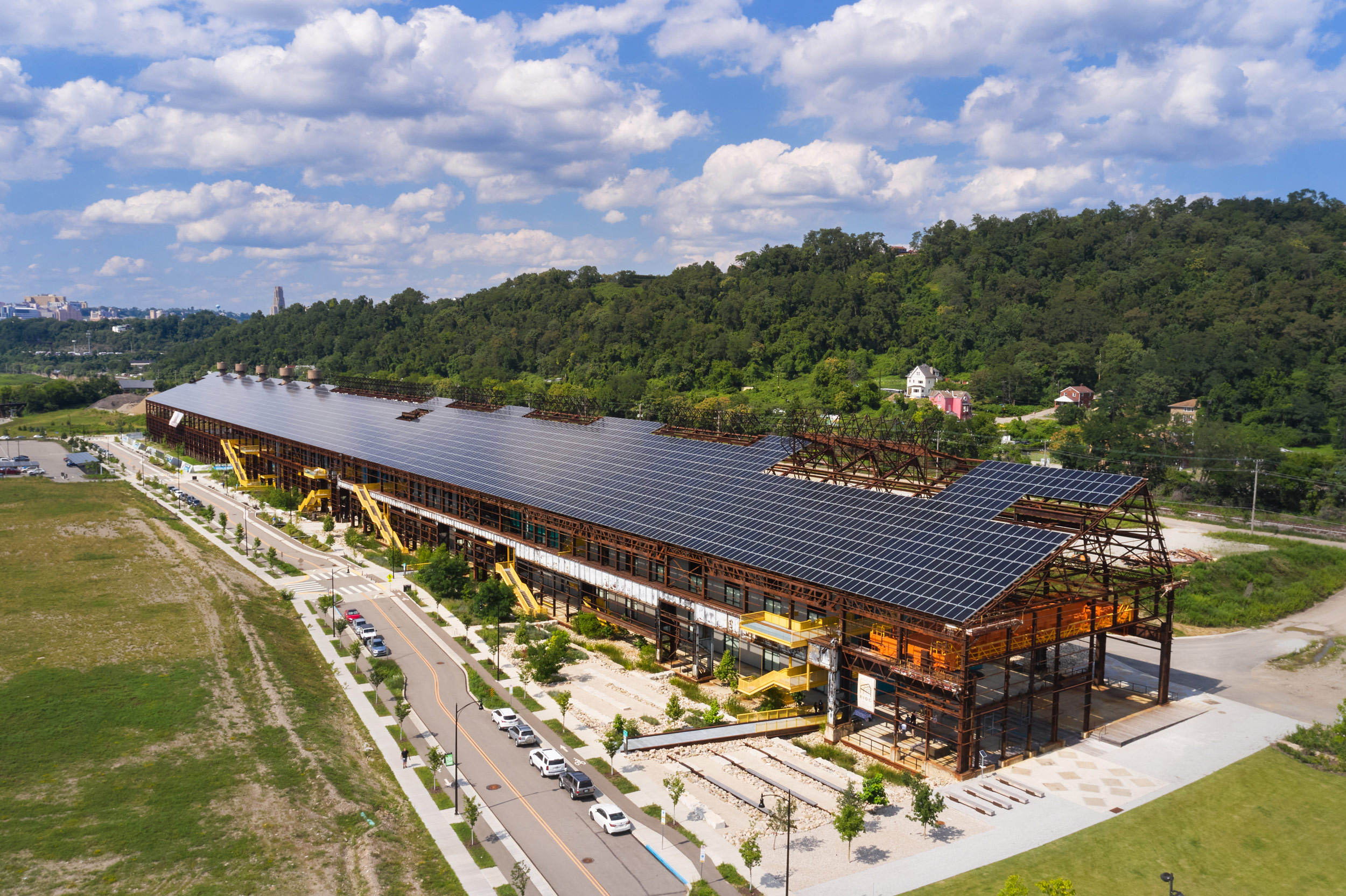
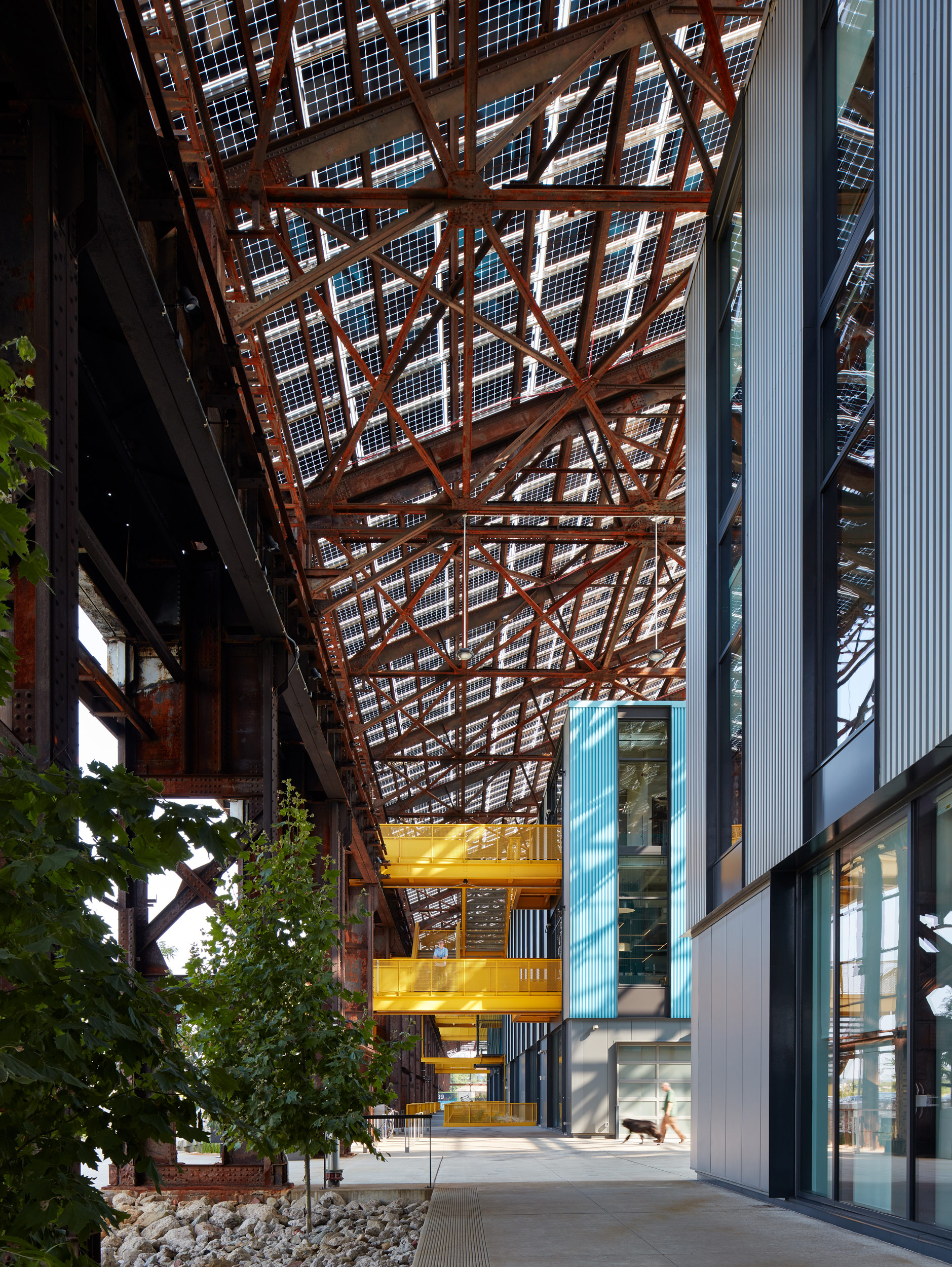
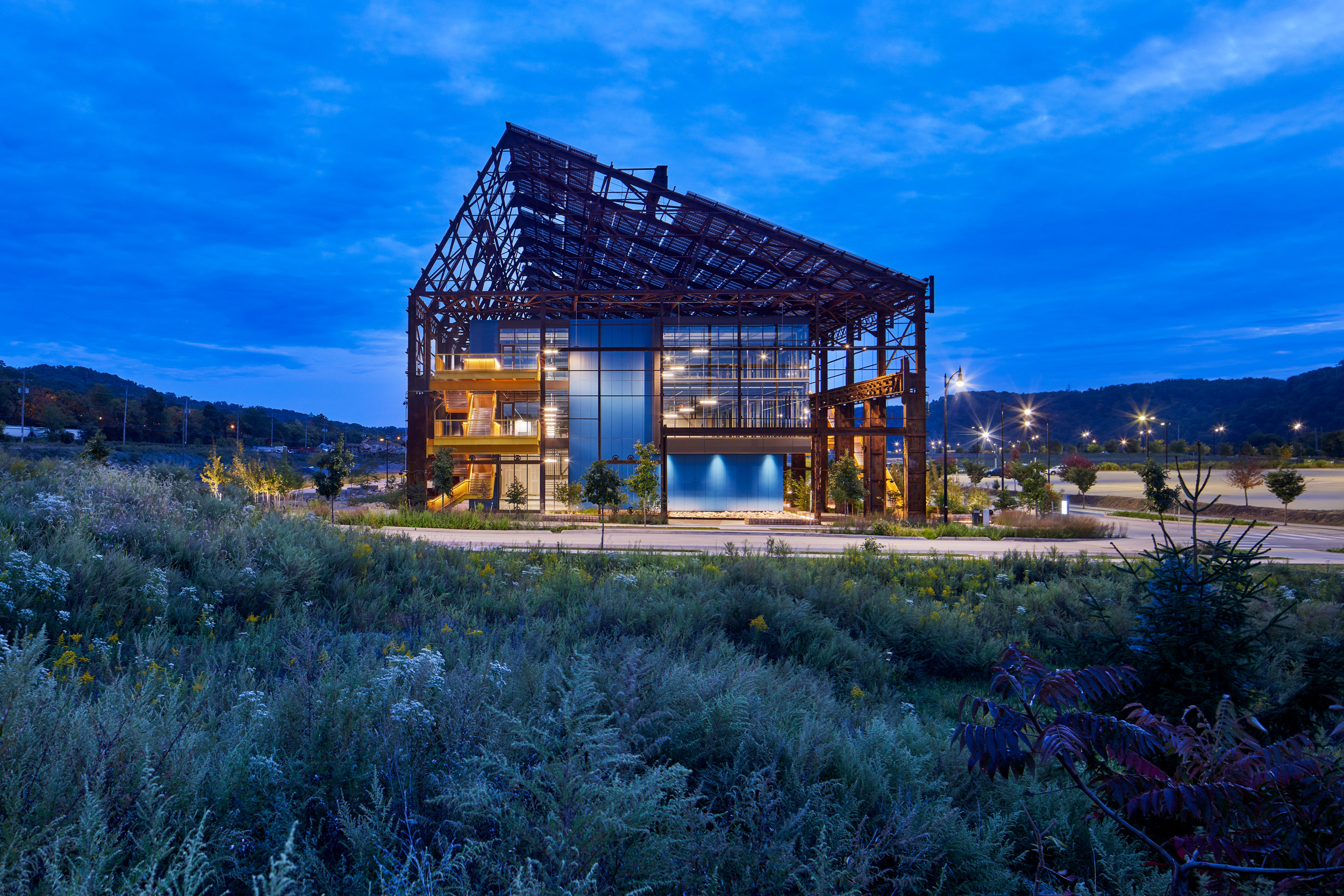
RIDC Mill 19 is a landmark adaptive reuse project that transforms a former steel mill into a high‑performance hub for advanced manufacturing, research, and innovation. Set within the preserved steel superstructure of the historic Jones & Laughlin mill in Pittsburgh, the project demonstrates how integrated lighting design can meaningfully advance sustainability while enhancing architectural expression and human experience.
A defining aspect of the lighting strategy is its direct connection to on‑site renewable energy. A large rooftop photovoltaic array supplies the building with clean power, providing the primary energy source for highly efficient lighting systems throughout the project. By pairing photovoltaic generation with reduced lighting power densities, advanced controls, and daylight‑first design, the lighting strategy contributes to an overall energy performance that exceeds code requirements by 44% and supports the project’s LEED Gold certification.
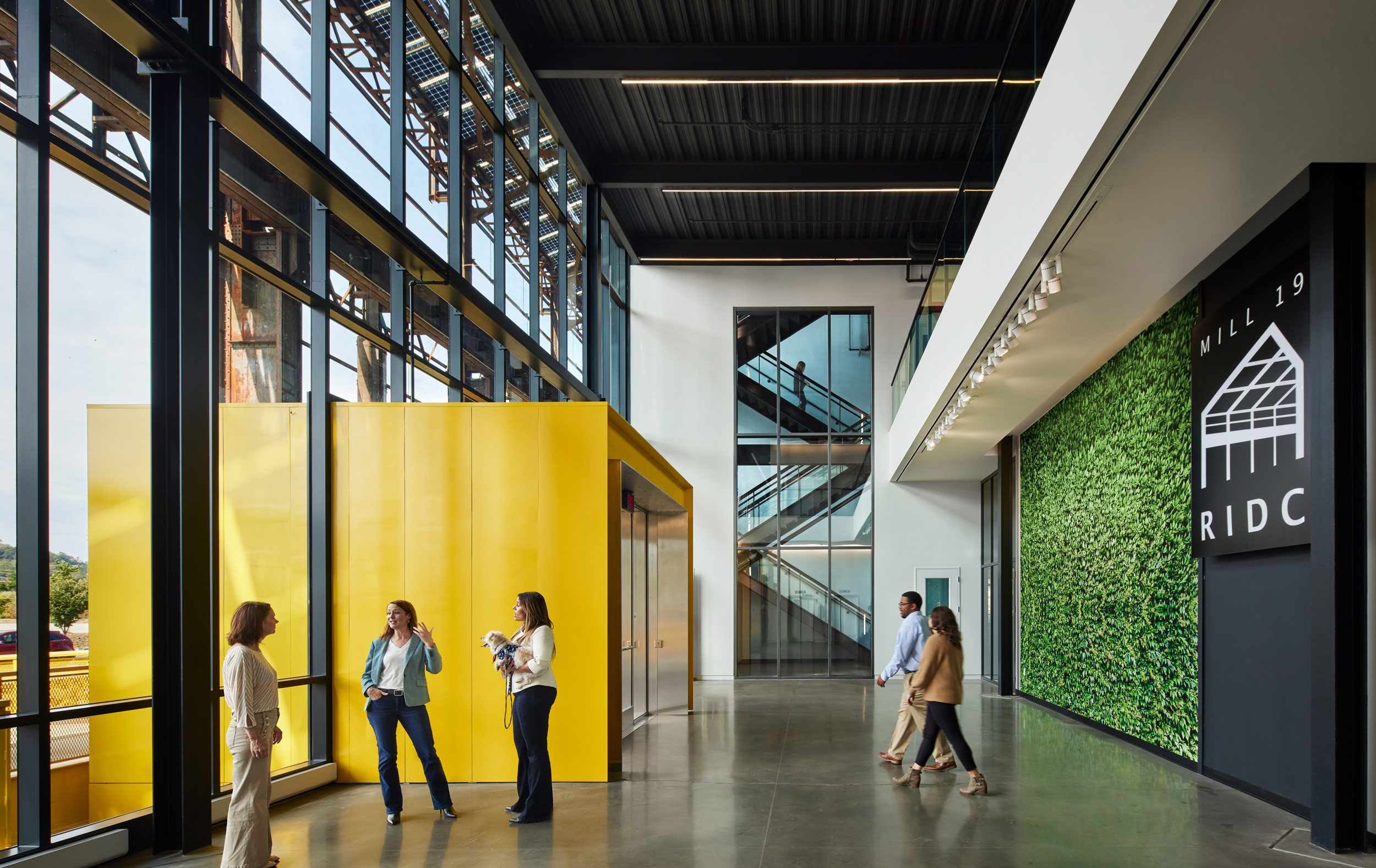
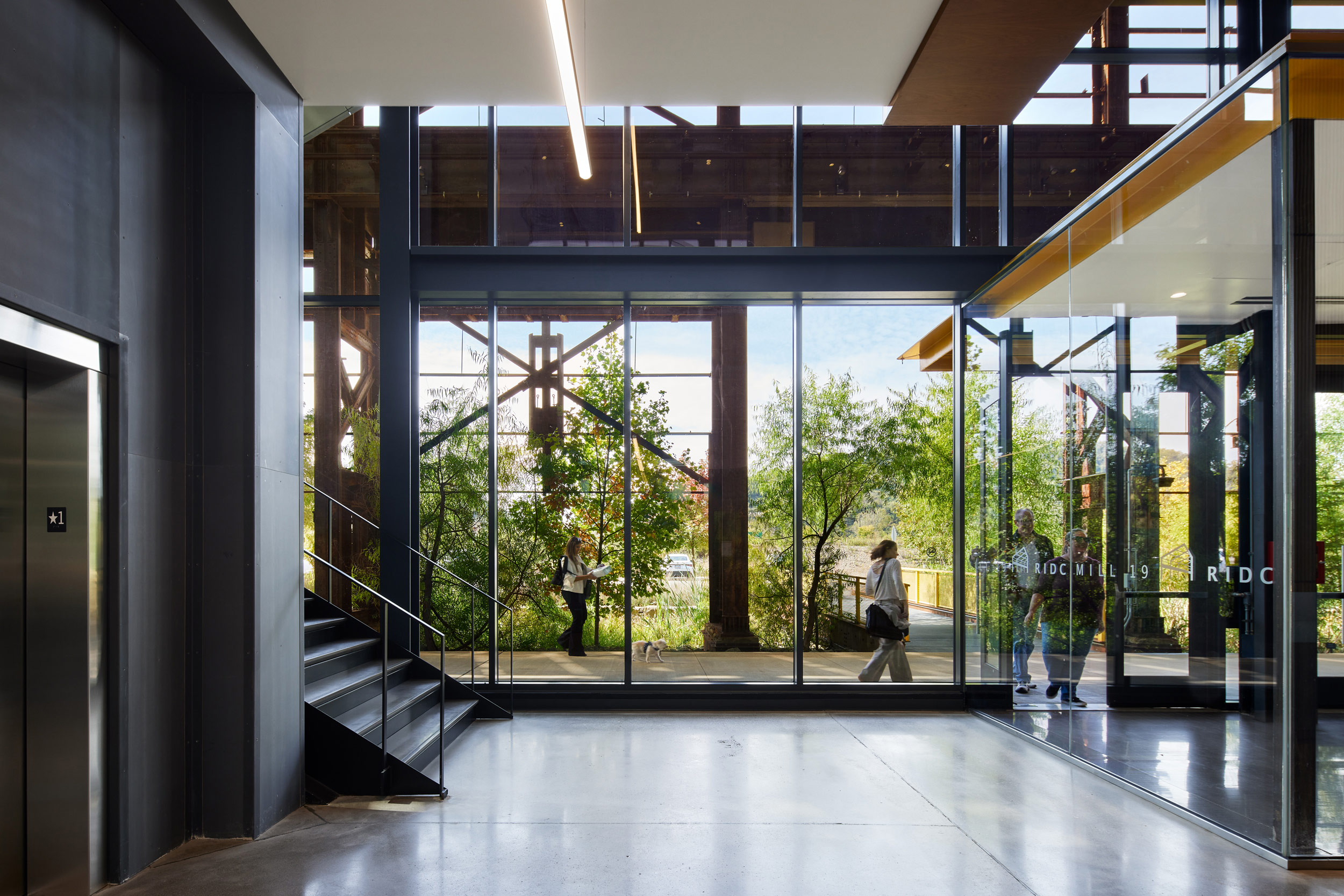
Lighting was developed as a fully integrated system—coordinated with architecture, structure, and landscape—to balance performance, flexibility, and experience. Extensive skylights and high‑performance glazing flood interior spaces with daylight, allowing electric lighting to operate primarily as a supplement. High‑efficacy luminaires and responsive daylight‑ and occupancy‑based controls further minimize energy use while maintaining visual comfort across a wide range of tenant spaces.
A key experiential element is the illuminated interior green wall, where carefully integrated lighting supports plant health while creating a natural, biophilic focal point within the industrial framework. This feature softens the historic steel structure, reinforcing a connection to nature and enhancing occupant well‑being through light, texture, and contrast.
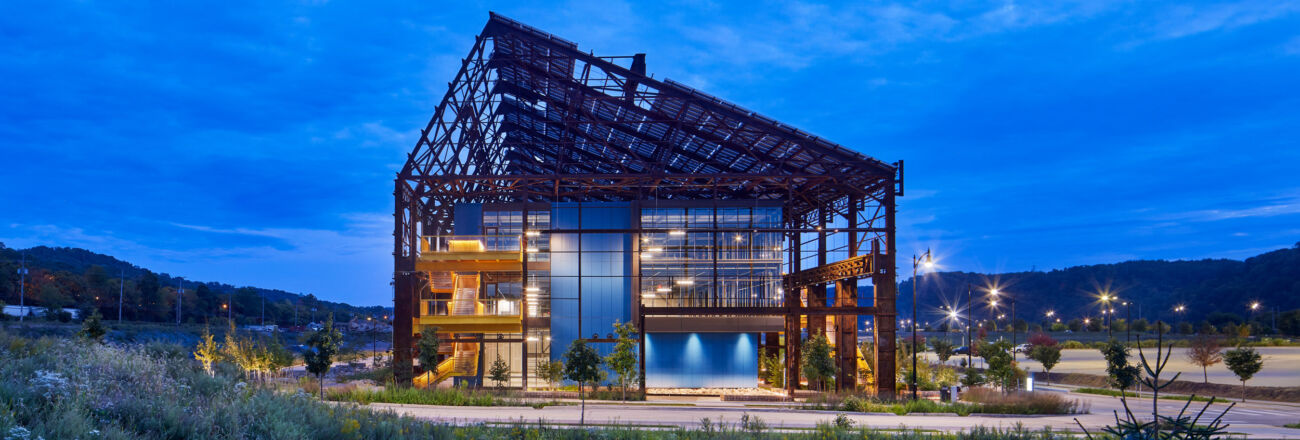
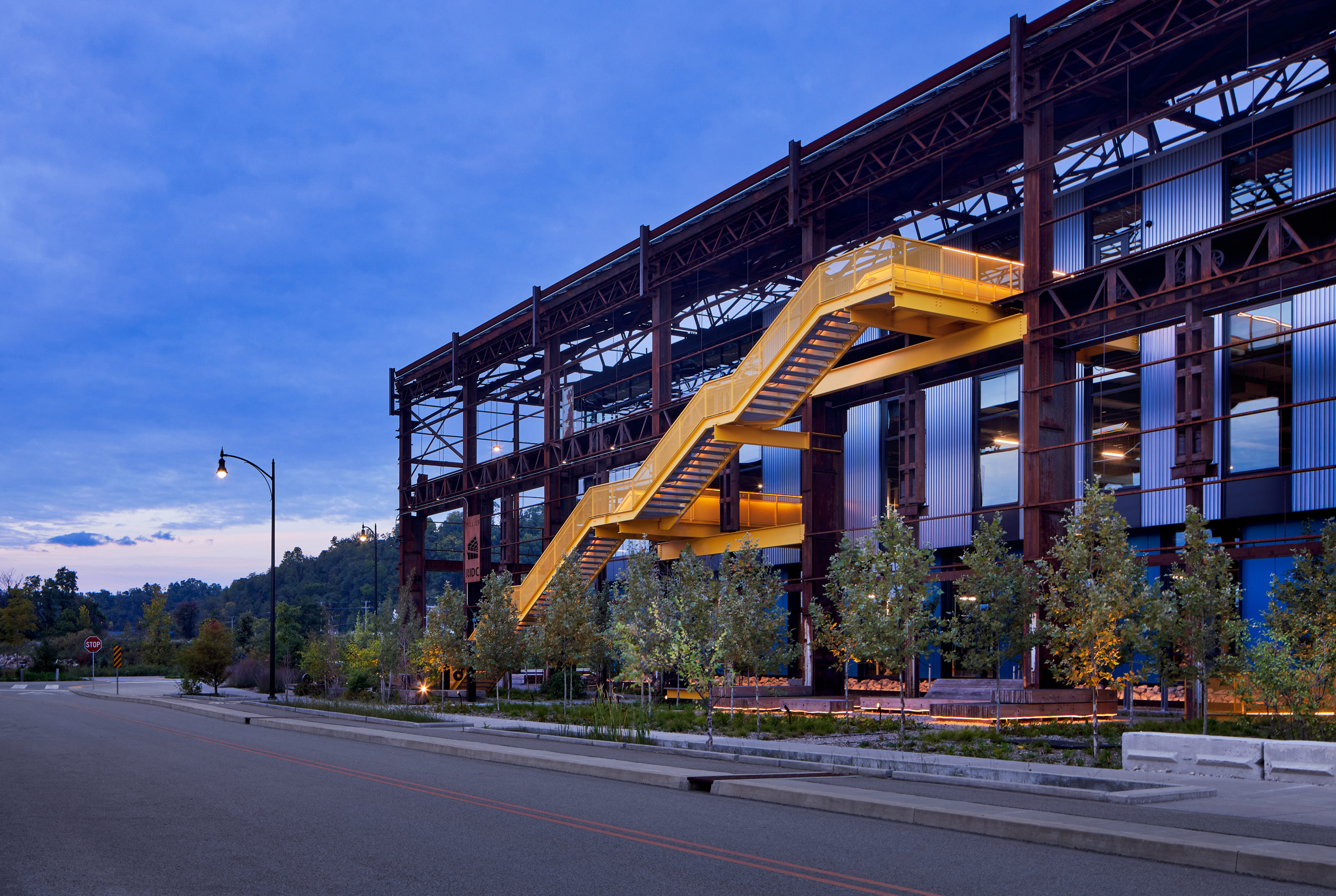
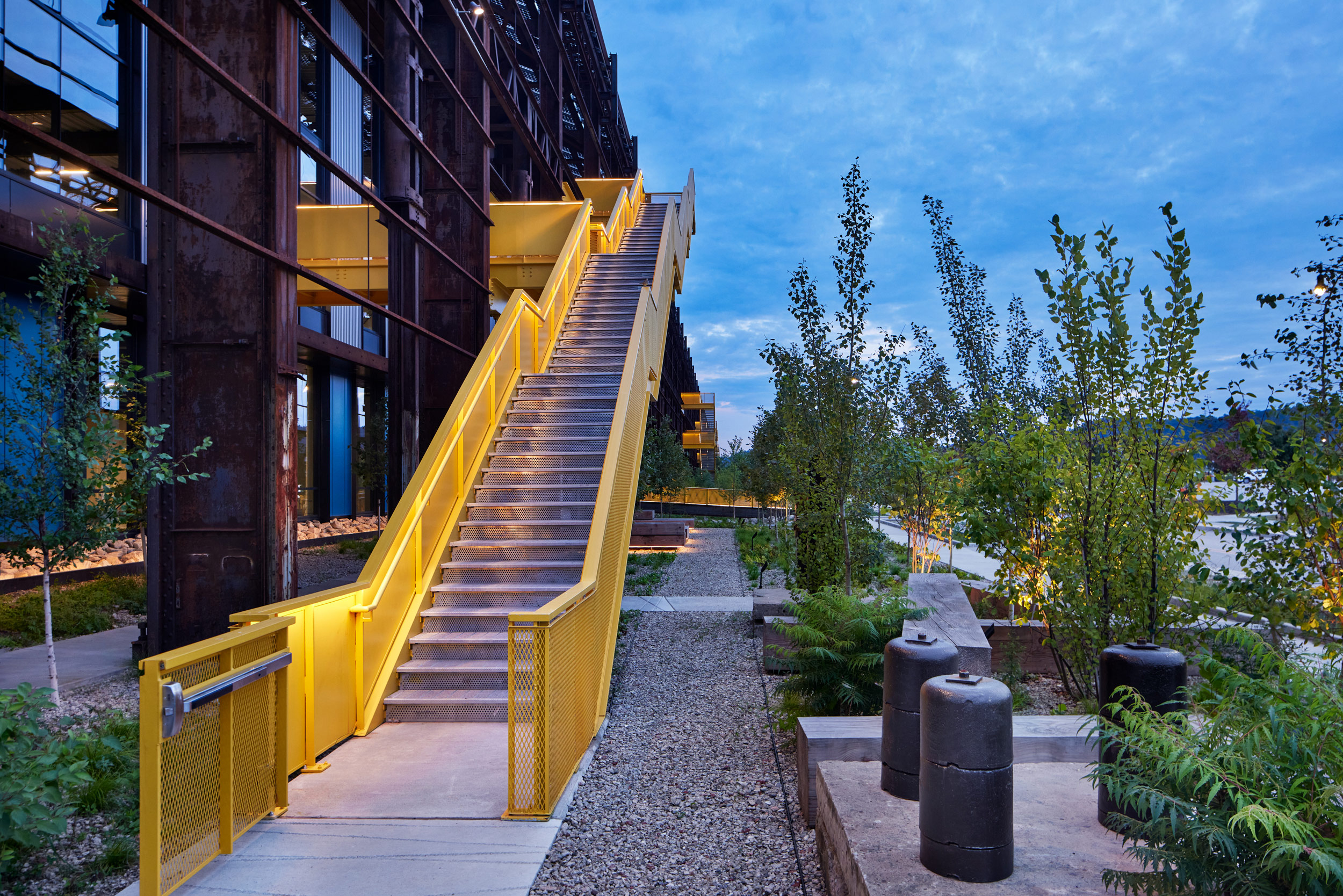
Exterior illumination reinforces sustainability and restraint. Concealed luminaires and warm light sources are used to highlight the architecture without excess brightness or visual clutter, allowing the historic structure to read clearly at night while minimizing energy use and light pollution.
Together, these strategies position RIDC Mill 19 as a model for renewable‑powered, integrated lighting design—demonstrating how light can support energy performance, ecological goals, and architectural identity within large‑scale adaptive reuse.